Hip Bursitis: More Than a Simple Muscle Strain
That pain on the outside of your hip may not be “just a pulled muscle.”
Hip pain can be frustrating—especially when it makes walking, climbing stairs, exercising, or even sleeping on your side uncomfortable. One common cause of pain on the outside of the hip is hip bursitis, a condition that is often confused with a simple muscle strain.
The difference matters because bursitis can involve more than one structure around the hip.
What Is Hip Bursitis?
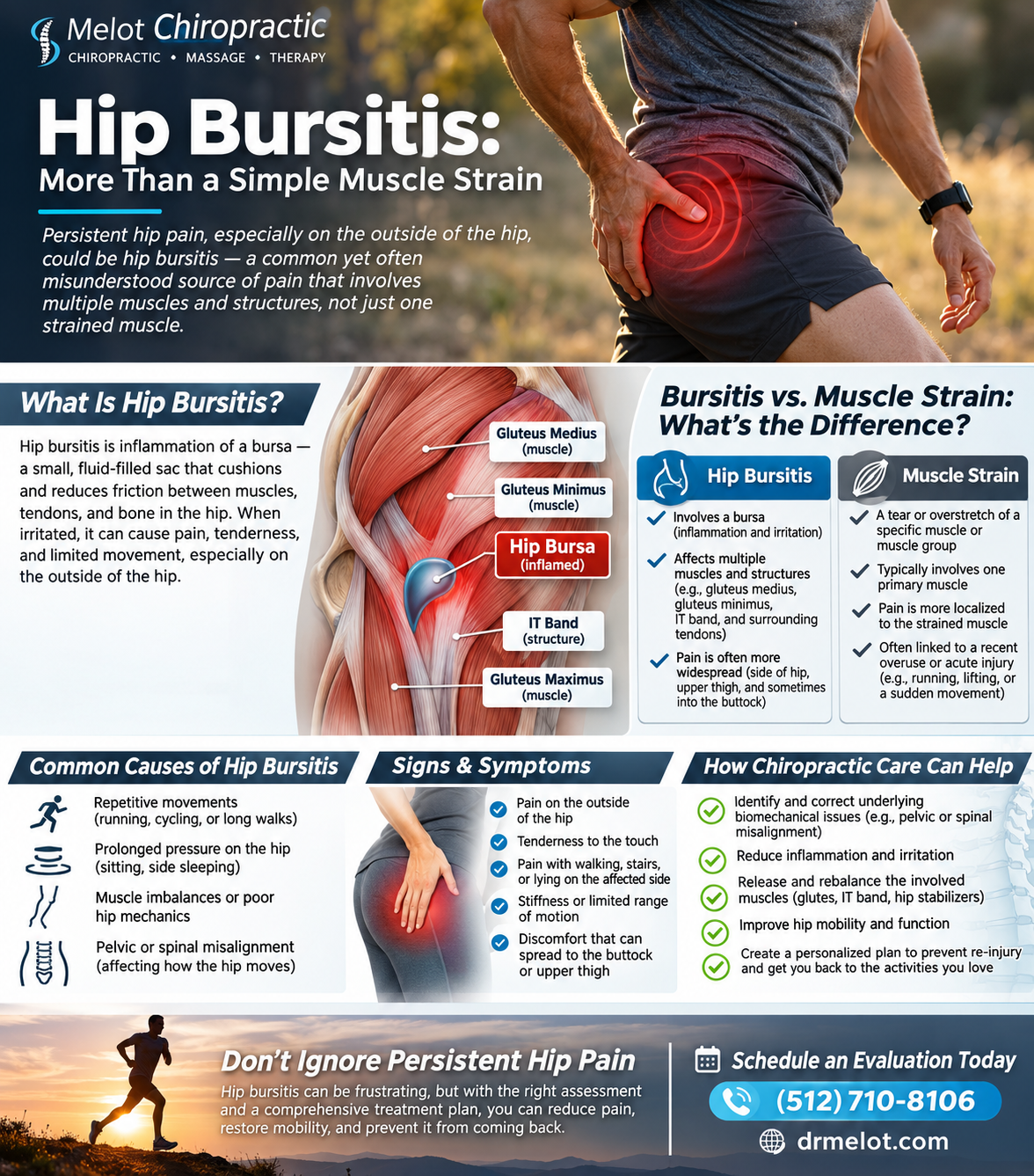
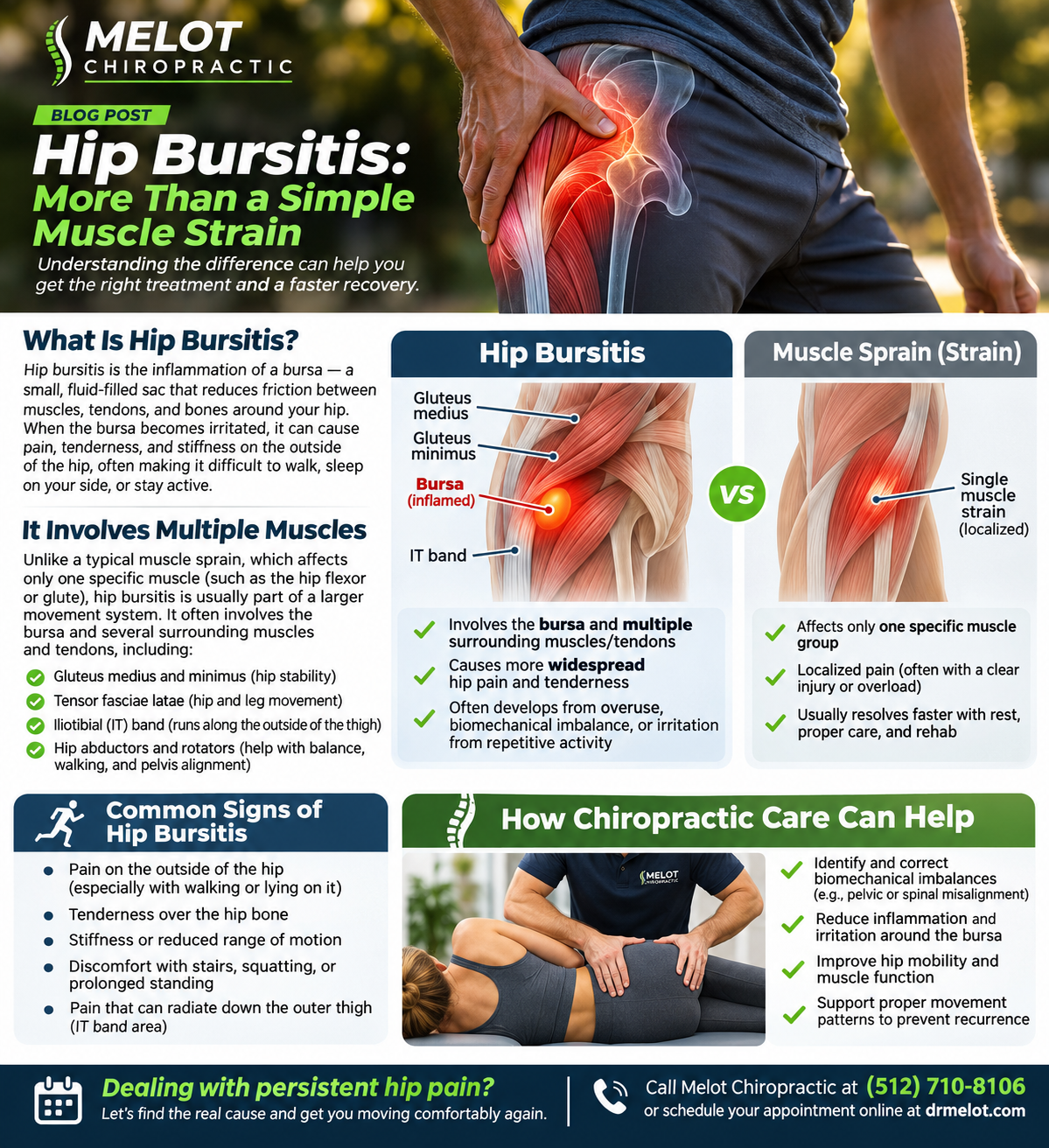
A bursa is a small, fluid-filled sac that helps reduce friction between bones, muscles, and tendons. Several bursae are located around the hip, with the trochanteric bursa being one of the most commonly associated with pain on the outside of the hip.
When a bursa becomes irritated, the surrounding area can become painful and sensitive.
Hip bursitis may cause:
Pain on the outside of the hip
Tenderness when pressing on the hip
Pain when lying on the affected side
Discomfort when walking or climbing stairs
Pain with prolonged standing
Stiffness or reduced hip mobility
Pain that can extend into the outer thigh
Hip Bursitis vs. a Muscle Strain
This is an important distinction.
A muscle strain generally occurs when a specific muscle or muscle-tendon unit is overstretched or damaged. For example, someone might strain a hip flexor, hamstring, or gluteal muscle.
Hip bursitis is different.
The primary problem is irritation or inflammation of the bursa. However, because the bursa sits within a complex system of muscles, tendons, and connective tissue, the surrounding structures can also become irritated or begin compensating for the painful area.
The muscles commonly involved around the lateral hip include the:
Gluteus medius
Gluteus minimus
Gluteus maximus
Tensor fasciae latae
Hip abductors and external rotators
The iliotibial band and surrounding tendons can also contribute to irritation and altered mechanics.
In other words, a muscle strain can be a localized injury to one particular muscle, while hip bursitis often becomes a problem involving the broader movement system around the hip.
That is one reason simply treating the painful spot may not address why the problem developed in the first place.
Why Does Hip Bursitis Develop?
Hip bursitis can develop for several reasons.
Repetitive Activity
Running, walking long distances, climbing stairs, cycling, or other repetitive activities can repeatedly stress the structures around the hip.
Sleeping or Sitting on the Hip
Repeated pressure on the outside of the hip can irritate the bursa, particularly if someone routinely sleeps on one side.
Muscle Imbalances
If some hip muscles are weak or other muscles are excessively tight, the hip may not move efficiently. This can increase stress on the tissues surrounding the bursa.
Changes in Movement Mechanics
The pelvis, lower back, hip, knee, and foot all work together during walking and exercise. Problems in one area can change how the hip moves and increase stress elsewhere.
Sudden Changes in Activity
Increasing running mileage, starting a new workout program, or suddenly becoming more active can overload tissues that aren't accustomed to the new workload.
How Can You Tell If Your Hip Pain May Be Bursitis?
There is no substitute for a proper examination, but hip bursitis often produces pain that is:
Located on the outside of the hip
Rather than deep in the groin, the pain is commonly felt over the bony prominence on the outside of the hip.
Tender to touch
Pressing directly over the affected area may reproduce the pain.
Worse when lying on that side
This is a particularly common complaint.
Worse with repetitive activity
Walking, running, stairs, squatting, or prolonged standing may aggravate symptoms.
Associated with surrounding muscle tightness or weakness
The muscles around the hip may become involved as the body attempts to protect the painful area.
Why Treating the Whole Hip Matters
When hip pain develops, it can be tempting to focus entirely on the location that hurts.
But pain isn't always coming from a single isolated structure.
The hip functions as part of a larger kinetic chain involving the:
Lower back → pelvis → hip → knee → ankle
If the pelvis isn't moving properly, if certain muscles aren't stabilizing the hip effectively, or if movement patterns have changed because of an old injury, the tissues around the hip may be exposed to abnormal stress.
That's why an effective treatment plan should evaluate how the hip is functioning—not simply where it hurts.
How Chiropractic Care May Help
At Melot Chiropractic, our goal is to identify the factors contributing to your hip pain and develop a treatment plan based on your individual condition.
Depending on the findings of your examination, care may include:
Evaluation of hip and pelvic mechanics
Chiropractic adjustments when appropriate
Soft-tissue and muscle therapy
Mobility work
Stretching and strengthening recommendations
Correction of movement patterns
Recommendations for modifying aggravating activities
The goal isn't simply to make the hip feel better temporarily. It's to help restore normal movement and reduce the mechanical stress that may be contributing to the problem.
Don't Assume Every Hip Injury Is a Pulled Muscle
If you've been dealing with persistent pain on the outside of your hip, don't automatically assume you've pulled a muscle.
A muscle strain and hip bursitis can feel similar, but they involve different tissues and may require different approaches.
If your hip pain keeps coming back, hurts when you lie on your side, or interferes with walking or exercise, it may be worth having the area properly evaluated.
Ready to Find Out What's Causing Your Hip Pain?
At Melot Chiropractic, we can evaluate your hip, pelvis, and surrounding movement patterns to help determine what may be contributing to your symptoms.
Call Melot Chiropractic at (512) 710-8106 or visit drmelot.com to schedule an evaluation.
This article is for educational purposes and is not a substitute for an individualized medical evaluation. Hip pain can have many causes, and persistent, severe, or unexplained symptoms should be evaluated by an appropriate healthcare professional.